Filtering the nodes of a traffic source
Webmarketer imports every node of your traffic source and lets you browse them all. Depending on how your ad account is set up, however, you may come across unwanted nodes on the various Webmarketer screens (multi-site ad account, campaigns without external traffic, and so on). Those nodes can skew your reports, and therefore your analyses, which is why they can be filtered out.
Configuration
The filtering rule is configured for each traffic source (Traffic sources page > edit the traffic source > Filtering tab).
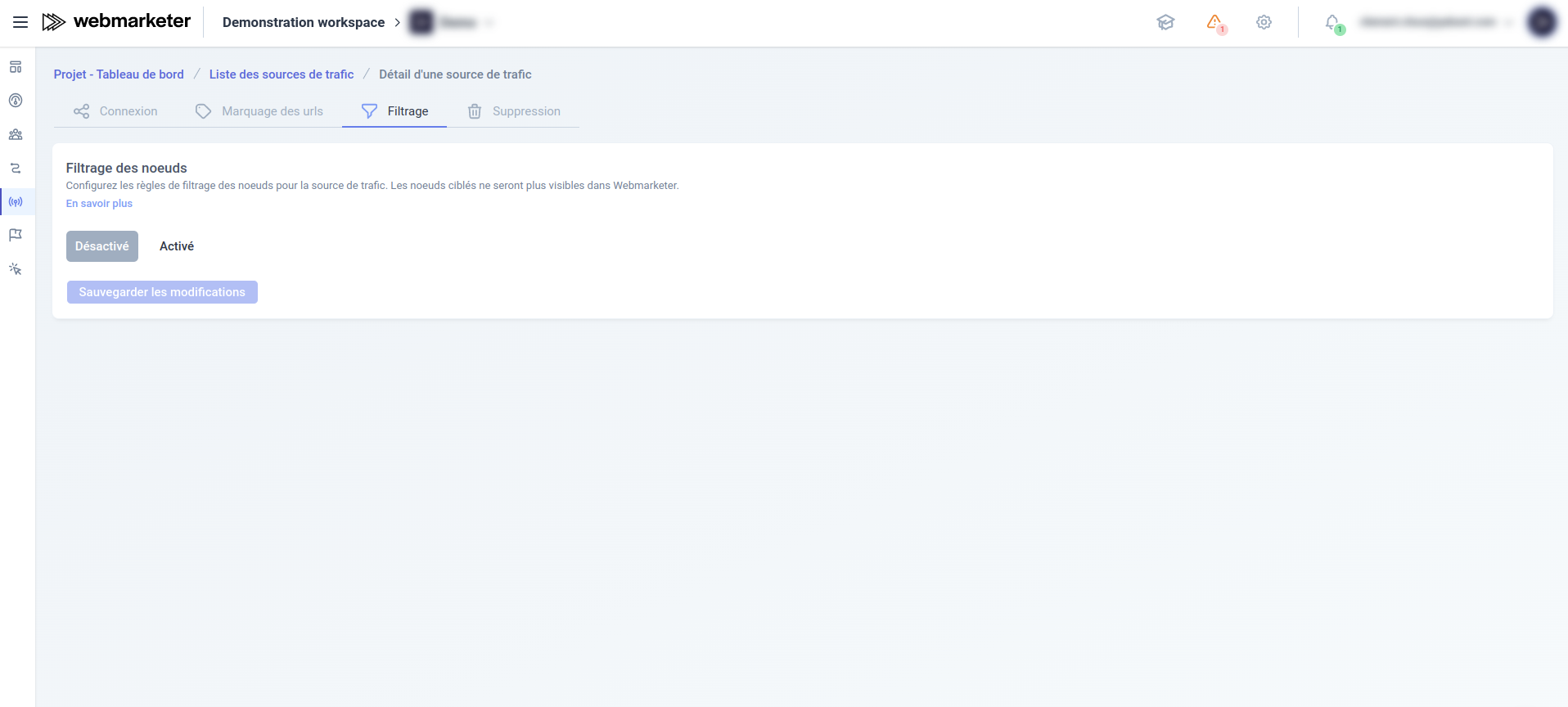
When filtering is disabled, no exclusion rule is applied to the imported nodes, meaning every node is browsable. If a rule is configured and you want to stop filtering, you can turn the feature off.
Turning filtering off deletes the configured rule, and the previous rule cannot be recovered.
While a filtering rule is active, you can come back to this page at any time to review the state of the filtering.

You can review the rule that is configured, along with the filtering state of the nodes. The node filtering state summarizes the nodes currently filtered out by the rule (those nodes are therefore no longer visible in Webmarketer).
Some nodes may be flagged with a Traffic detected warning. This means those nodes were filtered out even though they have received, or are still receiving, traffic captured by Webmarketer. Those nodes should not be filtered out, as doing so could make you miss crucial data.
To prevent your nodes from being filtered out by mistake, Webmarketer checks that no filtered node is receiving (or has received) traffic. If it detects incorrect filtering, an alert is raised on the project suggesting you fix the problem (by editing the rule).
The filtering rule can be edited at any time to add or remove nodes to filter out. When the rule is edited, a preview of the changes lets you review the impact of your edit (which takes effect once the new rule is saved).
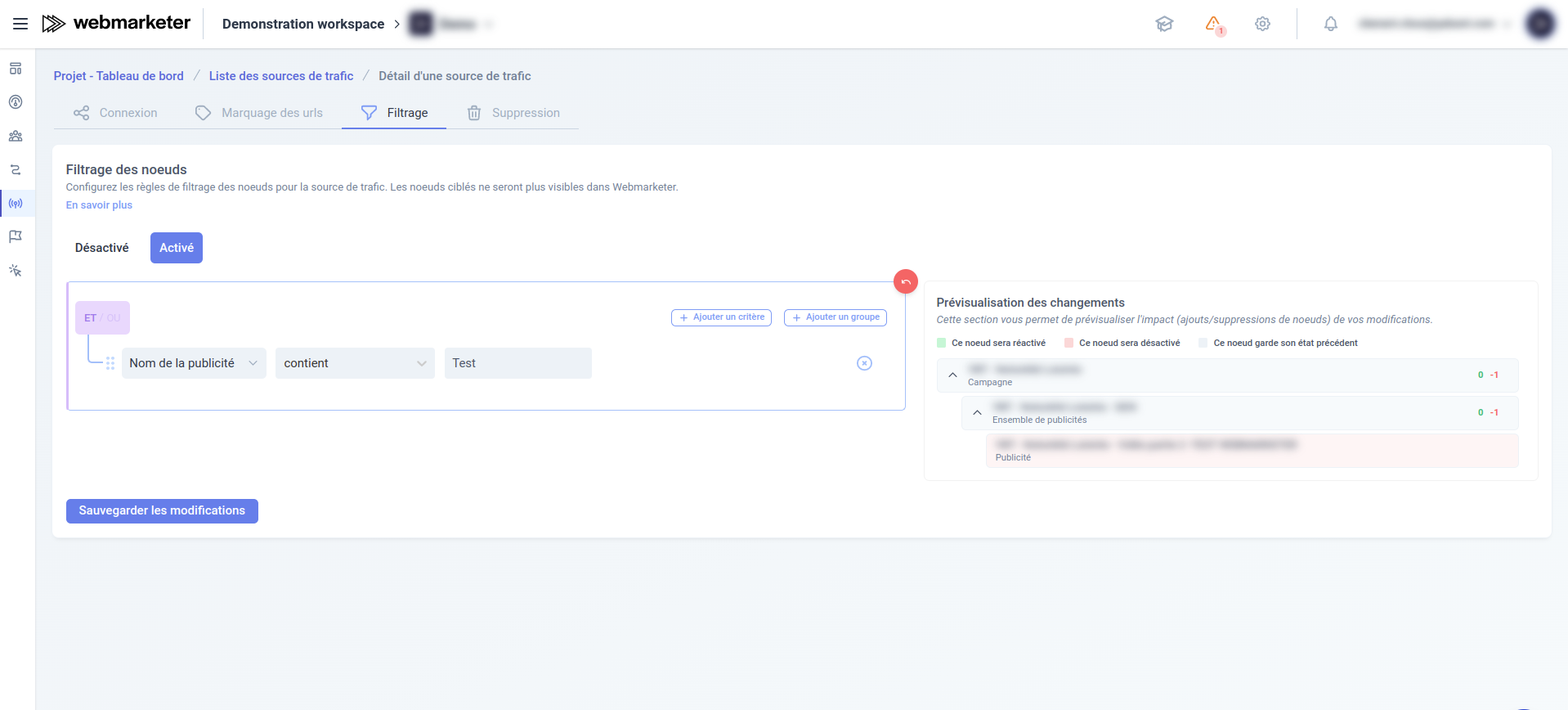
That preview relies on the previous filtering state to show you the nodes that will potentially be:
- Re-enabled (in green): the node was filtered out and will be re-enabled once the rule is edited
- Disabled (in red): the node was not filtered out and will become filtered once the rule is edited
- Unchanged (in grey): the node keeps its previous state (disabled if it was disabled, enabled if it was enabled) once the rule is edited